



Grey hair is one of the most visible markers of aging, and for some people, it arrives earlier than expected. At Hårklinikken, we believe grey hair carries no shame. It is a natural, often striking expression of the body's biological journey, and one that perhaps deserves more appreciation than popular culture has historically afforded it.
The conversation around grey hair is shifting. Many people are choosing to embrace it, and as a Danish brand, this feels close to home.
In Nordic culture, silver and grey hair has long been regarded not as something to resist, but as a natural expression of a life well lived. It is a perspective woven into Nordic culture for generations, rooted in a quiet relationship with nature, authenticity, and the understanding that the health and vitality of the hair and scalp matter far more than the shade.
There is perhaps a reason that so many Danish women appear genuinely radiant in their grey: the focus has always tended toward nourishment and care rather than concealment.
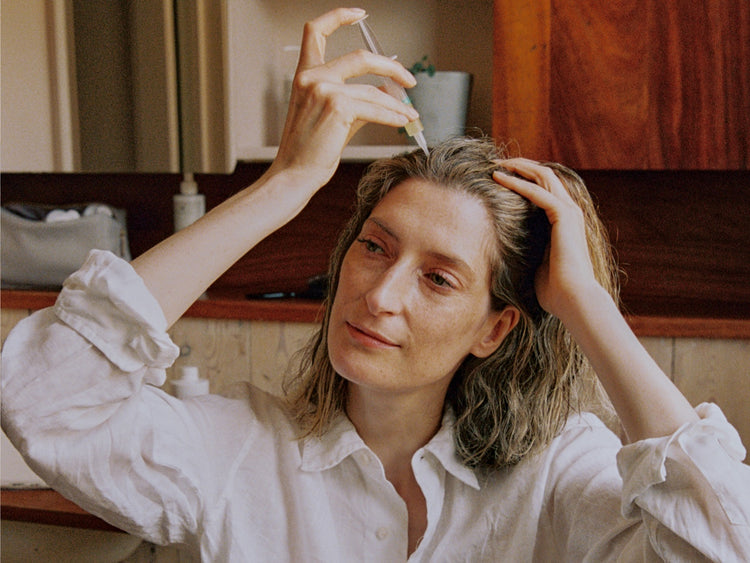
 Anja Alajdi, renowned Danish stylist and Hårklinikken client, has long embraced her natural silver hair as an expression of authenticity and confidence.
The research here is not to suggest that grey hair is something to be corrected, but because the biology underlying it illuminates much about how the body responds to time, genetics, and the pressures of daily life. Stress is frequently cited as a cause of premature greying, so this article will dive into the complex science behind this claim.
Genetics set the timeline
For most people, the age at which grey hair appears is mostly predetermined by genetics. Research points to heredity factors being a primary force behind achromotrichia, the scientific term for the progressive loss of pigment in the hair shaft.
If your parents greyed early, there is a reasonable likelihood that you may too. Ethnicity also plays a measurable role; studies suggest that greying typically begins in the mid-30s for Caucasians, the late-30s for those of Asian heritage, and the mid-40s for those of African heritage. These patterns point to genetic architecture as a central foundation of the greying process.
How hair loses its color
To understand greying, it helps to understand how hair acquires its color in the first place. Each hair follicle contains specialized cells called melanocytes, which produce melanin, the pigment responsible for the color of your hair, skin, and eyes.
As we age, these melanocyte populations gradually decline in both number and activity. The follicle's pigmentary unit becomes less efficient, melanin production slows, and the hair shaft that grows from it contains progressively less color. Over time, the hair appears silver, then white. This biological process unfolds across decades mainly guided by genetic programming.
Does stress cause premature grey hair?
The idea that prolonged stress can accelerate greying has long been part of popular thinking. Until recently, the science was largely inconclusive.
A study published in the journal eLife by researchers at Columbia University offered some of the most precise evidence to date on the relationship between psychological stress and hair pigmentation. Using high-resolution imaging that maps the pigmentation changes along each hair shaft, with a resolution of approximately one hour of growth per cross-section, the researchers were able to find a correlation between stress levels and measurable shifts in hair color.
The most interesting finding of this study was that some grey hairs returned to their naturally pigmented state following a reduction in stress.
One participant showed five strands reverting toward their darker color during a period of vacation. The researchers also found that grey hairs exhibited higher levels of proteins associated with mitochondrial activity and energy metabolism, suggesting the follicle may be under measurable biological strain during greying.
This study suggests that the mitochondria, which is the powerhouse of the cell, may act as receptors for psychological stress. They can possibly be translating this physiological strain into changes within the growing hair shaft.
Oxidative stress and greying
Research suggests that oxidative stress may also impact the greying of hair. A study shows that melanin production inherently generates unstable molecules known as reactive oxygen species, also known as free radicals. These are essentially cellular byproducts that, when present in excess, may begin to damage the structures around them.
The follicle relies on a network of antioxidant enzymes to neutralize these molecules and maintain balance. When that balance tips, the pigment-producing cells within the follicle may come under measurable strain.
Greying follicles show lower levels of key antioxidant enzymes and higher levels of oxidative damage. Over time, the accumulated burden may impair the function of color producing cells and may contribute to their gradual decline within the follicle environment.
Oxidative damage accumulates across years, influenced by a range of factors including UV exposure, smoking, nutritional deficiencies, and the physiological effects of chronic stress.
Deficiencies of certain minerals such as copper, calcium, and ferritin, have been identified in the research as potential contributors to this oxidative imbalance. Nutrition, therefore, may play a meaningful supporting role. As our Chief Scientific Officer, Dr. Panos Vasiloudes, MD, PhD, and triple-board certified dermatologist, notes:
“High quality nutrition is paramount. Eating diverse, varied, nutrient dense food and ensuring adequate intake of the essential trace elements, is important as hair is among the fastest growing systems in the body, regenerating every four weeks, much like the epidermis and the gut.”
While the genetic timeline for greying may not be altered, the oxidative environment of the hair and scalp may, to some degree, be supported through considered nutrition and targeted supplementation.
Can grey hair be reversed?
Perhaps the most intriguing aspect of the Columbia study is the suggestion that greying hairs, under certain conditions, may not grow out entirely grey. The researchers proposed that each follicle has a kind of biological threshold or tipping point, and stress may push it over that line earlier than it would otherwise cross.
Crucially, this reversal appears most plausible in younger people, or those in the earlier stages of greying. Once the follicle's pigment-producing cells have been depleted over many years, restoration becomes considerably less likely.
This can suggest that stress alone does not cause greying, but it can accelerate a process that genetics had already set in motion for some individuals.
Supporting the follicle environment
Whether or not stress is a contributing factor in your own greying, the health of the follicle environment remains crucial to how hair grows and behaves. The scalp is a living, dynamic system that supplies each follicle with the oxygen, nutrients, and biological signals it requires to function well.
Prolonged stress places demand on this system and may affect the hair and scalp over time.
Nutritional support, stress management, and targeted supplementation can help optimize the conditions for hair follicles. While no intervention may alter the genetic timeline for greying, supporting the broader biology of the hair and scalp remains a meaningful and science-supported approach.
The Hair Supplement and stress
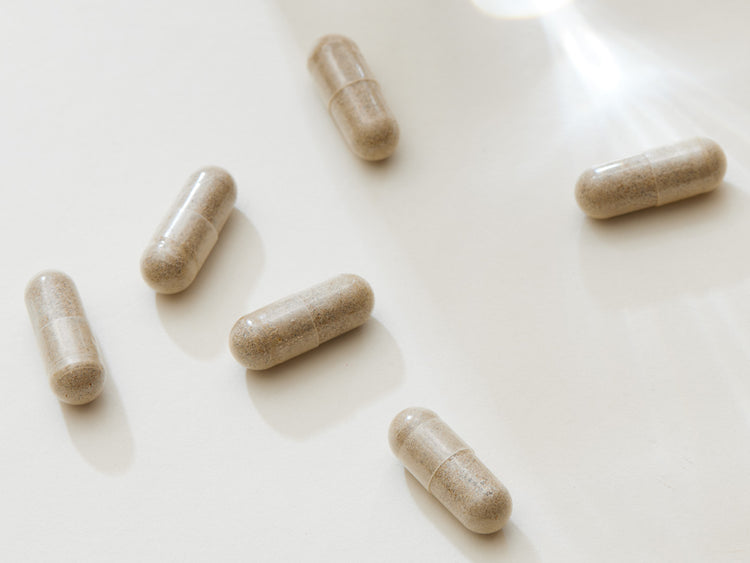
For those seeking to support their hair and scalp from within, the Hair Supplement was formulated with a whole-body perspective in mind. Stress is one of several interconnected factors that may contribute to hair shedding and scalp imbalance, and one that is often overlooked in conventional approaches to hair and scalp health.
Among its clinically studied ingredients is KSM-66® Ashwagandha Root, a well-researched adaptogen that has been clinically shown to reduce cortisol levels and help mitigate the physiological effects of chronic stress. Its inclusion reflects a foundational belief at Hårklinikken: that the condition of your hair and scalp is closely tied to the condition of the body as a whole.
Yet stress is only one piece of the picture. The Hair Supplement addresses multiple biological triggers of hair and scalp health through a carefully considered blend of science-backed ingredients. Organic pea shoot extract may support denser-looking hair, while saw palmetto extract serves as a natural DHT-blocking botanical. D-biotin offers a highly bioavailable form of biotin, and pomegranate extract contributes meaningful antioxidant support.
The formula also attends to the body's ability to absorb and process these nutrients efficiently with Panax Notoginseng and Astragalus Membranaceus, which may help support nutrient absorption through the gut wall, while Lactobacillus casei, a well-regarded probiotic strain, provides daily gut microbiome support.
The Hair Supplement is drug-free, vegan, and designed to complement Hårklinikken's personalized approach to hair and scalp health, an approach grounded in over 33 years of research and the trusted results of more than 100,000 clients worldwide.
Conclusion: stress can contribute to greys, but it’s rarely ever the only factor
For most people, the age that their hair starts to grey can be attributed to their genetics. The emerging research on stress and pigmentation is genuinely compelling, and the findings represent a meaningful step forward in understanding the relationship between psychological experience and hair and scalp health.
What that research may indicate, however, is that stress could be a contributing factor for some individuals at a particular stage of biological aging, rather than a primary cause.
The more considered question may be what steps can be taken to support the hair and scalp environment throughout life to create optimal circumstance for scalp health, color production and hair growth. That, at least, is an area where science, and carefully considered supplementation, may have something meaningful to offer.
