




What are sulfates?
Sulfates are a class of molecules that contain SO4-2- groups and can come as natural or synthetic and are salts that form when sulfuric acid reacts with other chemicals. There are many different types of sulfates which can be used as conditioning ingredients, stabilizers, emulsifiers, or cleansing agents. The sulfates that are generally referenced in “clean” beauty banned lists for skin and haircare are sodium lauryl sulfate (SLS) and sodium laureth sulfate (SLES). These sulfates are commonly found in cleansers and detergents from shampoo to laundry soap. They create the foamy, sudsy lather that we associate with cleansing products. These sulfates work as a surfactant, reducing surface tension between a product and your skin, allowing the active ingredients within the formula to do a more effective job. In shampoos, they are used because of their ability to lift oil, dirt and other product residues from the hair shafts and scalp, creating a cleaner scalp and hair.
Are sulfates bad for your hair and scalp?
Quite a bit of misinformation has been spread about sulfates. Since the early 1990s, several studies have been misrepresented to show SLS as a chemical linked to cataract formation and causing cancer. These claims have since been debunked through scientific investigations backed by safety and toxicity studies. Sodium lauryl sulfate (SLS) has been used in cosmetics formulations since the 1930s and is accepted as a safe ingredient for cosmetic use in the EU, the USA’s FDA and Health Canada. Sulfates are very powerful and depending on the formulation, they can end up stripping too many natural oils, putting your hair at risk of dryness, fragility, breakage, and dullness. If your scalp is particularly sensitive, sulfates can cause redness or itching. This has led to the perception that they’re too harsh on the scalp’s environment. However, concern surrounding sulfates should centre on the type, concentration, and whole formulation rather than the presence of the ingredient itself.
What are the benefits of sulfates?
Sulfate cleansing surfactants are effective cleansers. With their ability to bind both oil and water, they produce a luxurious foam that helps to lift away dirt and can work easily through hair strands and cleanse scalp surface. Sulfate-free formulas on the other hand, work differently from sulfate-containing shampoos. While they still cleanse your hair and scalp – albeit more gently – they won’t create the foamy lather that you might expect.
This means that people sometimes will overuse and waste the products in hopes of getting that foamy, sudsy experience. In some cases, attempts to increase foam in sulfate-free formulas, some formulators add additional foaming agents that end up being more drying to hair and scalp compared to sulfate-containing formulas.
Who should avoid sulfates?
The key to understanding whether you should avoid sulfates is to know your scalp and hair type. If you have coarse or curly hair, a dry or sensitive scalp, or have recently had a chemical or colour treatment, your strands are more prone to breakage, meaning a sulfate-free formula could be preferable.
Do Hårklinikken products contain sulfates?
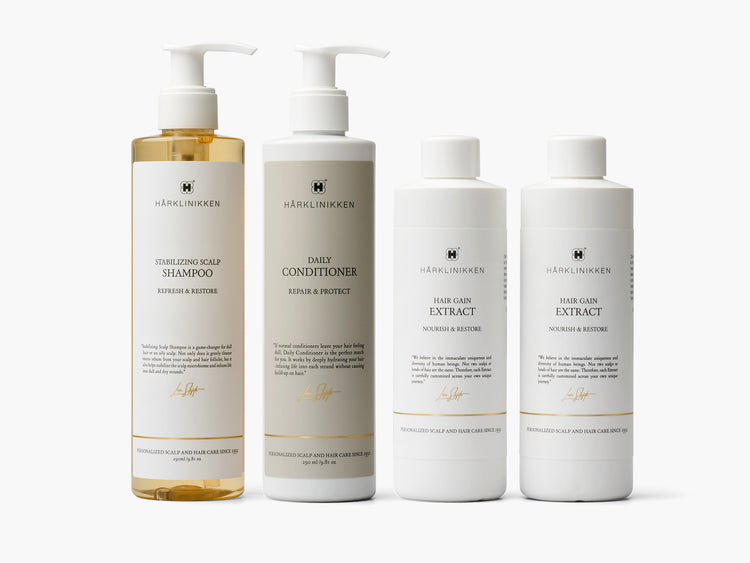
Hårklinikken products have gone through extensive development followed by rigorous clinic testing. This ensures the best performance and efficacy to support scalp health while creating an environment for better and more lustrous hair. Our shampoos have been developed with a gentle but effective sulfate in combination with other ingredients which make it suitable for sensitive skin and frequent use. Additionally, the formulas are optimised to cleanse the scalp while preparing the scalp microenvironment for delivering hair boosting constituents to the follicles.
The verdict
There’s not one universally correct answer for everybody. If you’re happy using products formulated with sulfates, there’s no reason to stop. The effectiveness and general safety of a product is always dependent on the entire formulation, as opposed to the presence of a single ingredient. However, if you’re experiencing skin or scalp irritation or have especially dry, damaged hair, explore formulas formulated for sensitive skin with or without sulfates. Either way, when purchasing shampoo, it’s important to consider the concentration and combination of the ingredients present rather than solely focusing on the “free-from” list.
To find out what kind of shampoo is most beneficial for you, book a consultation with one of our Hair Specialists, who will identify your unique hair type and scalp profile.
Unsure where to start?
We only accept candidates who we believe we can help, which is why our online Hair Assessment is the best place to start. Based on your results, you will either qualify for immediate treatment or we will organize a consultation.